Last updated November 23, 2026
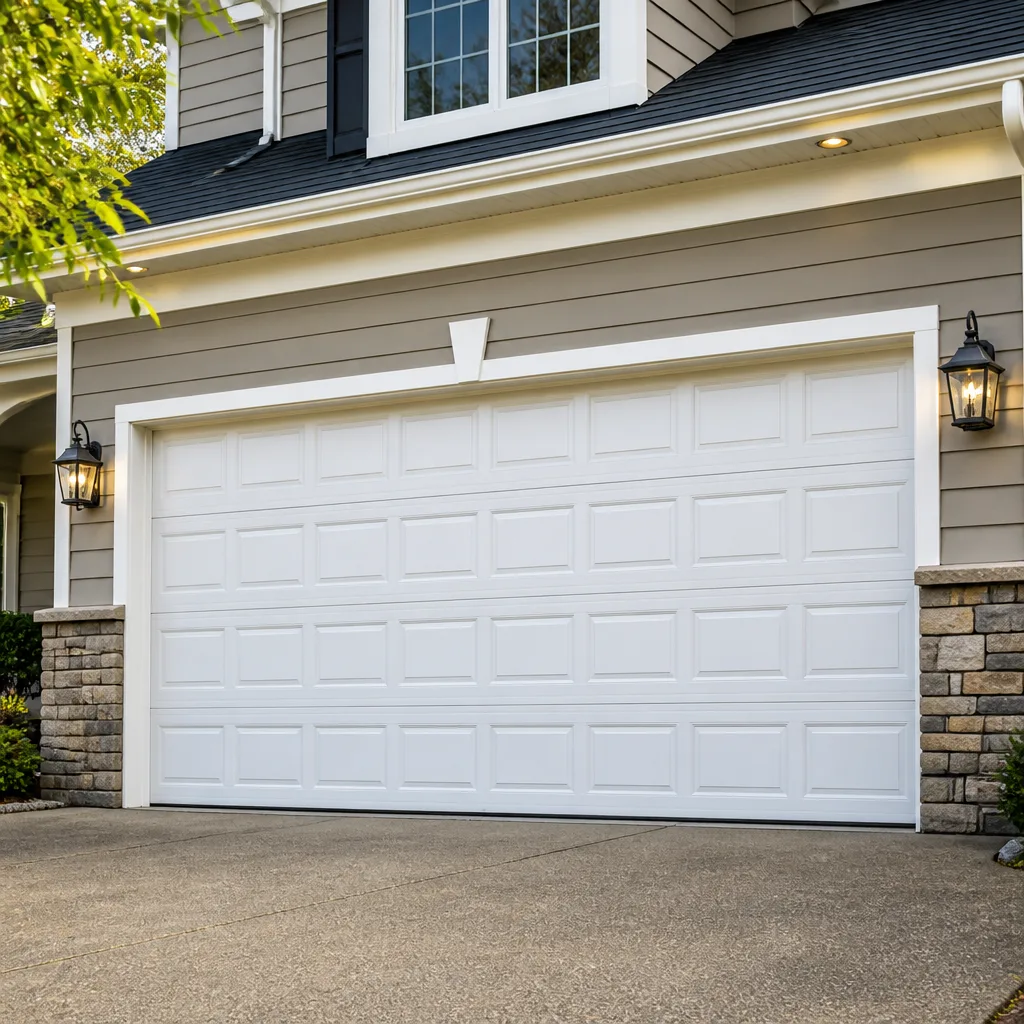 Raised-panel steel
 Carriage house
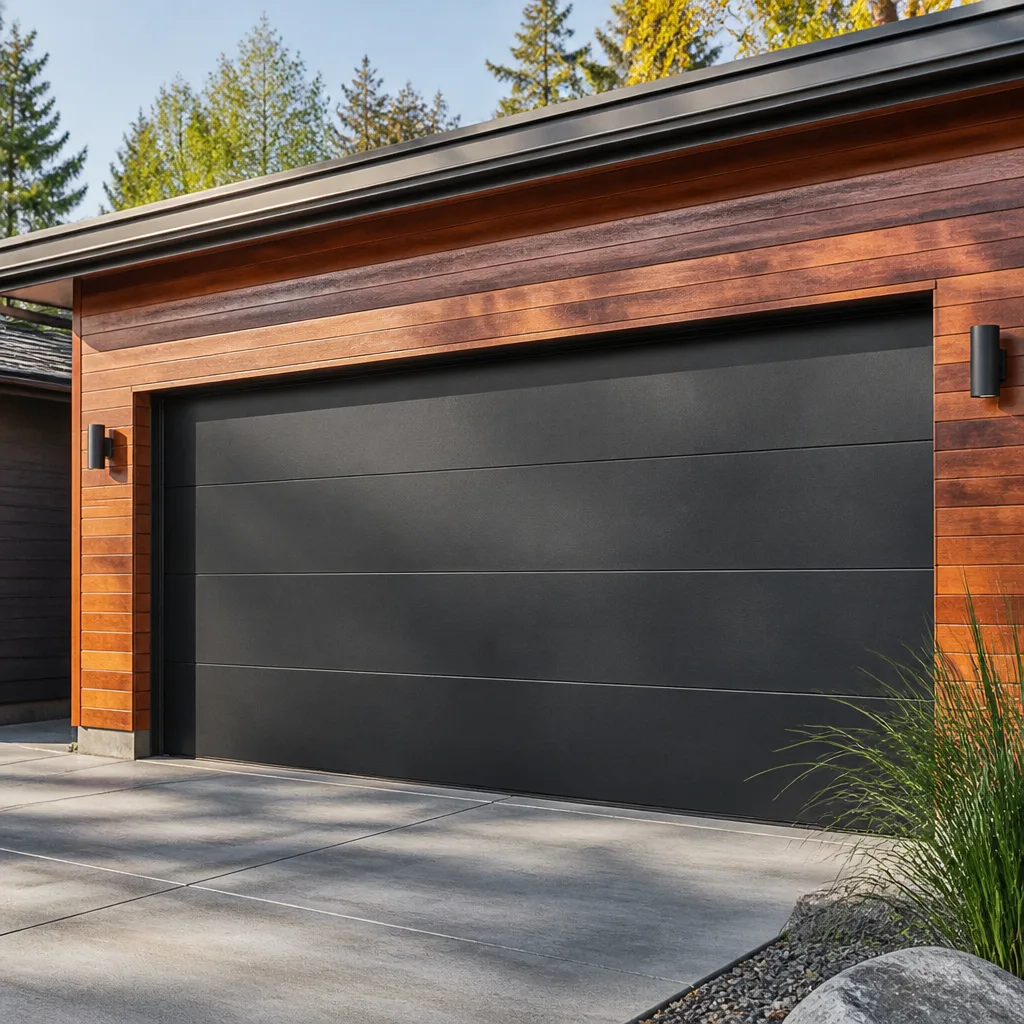 Modern flush
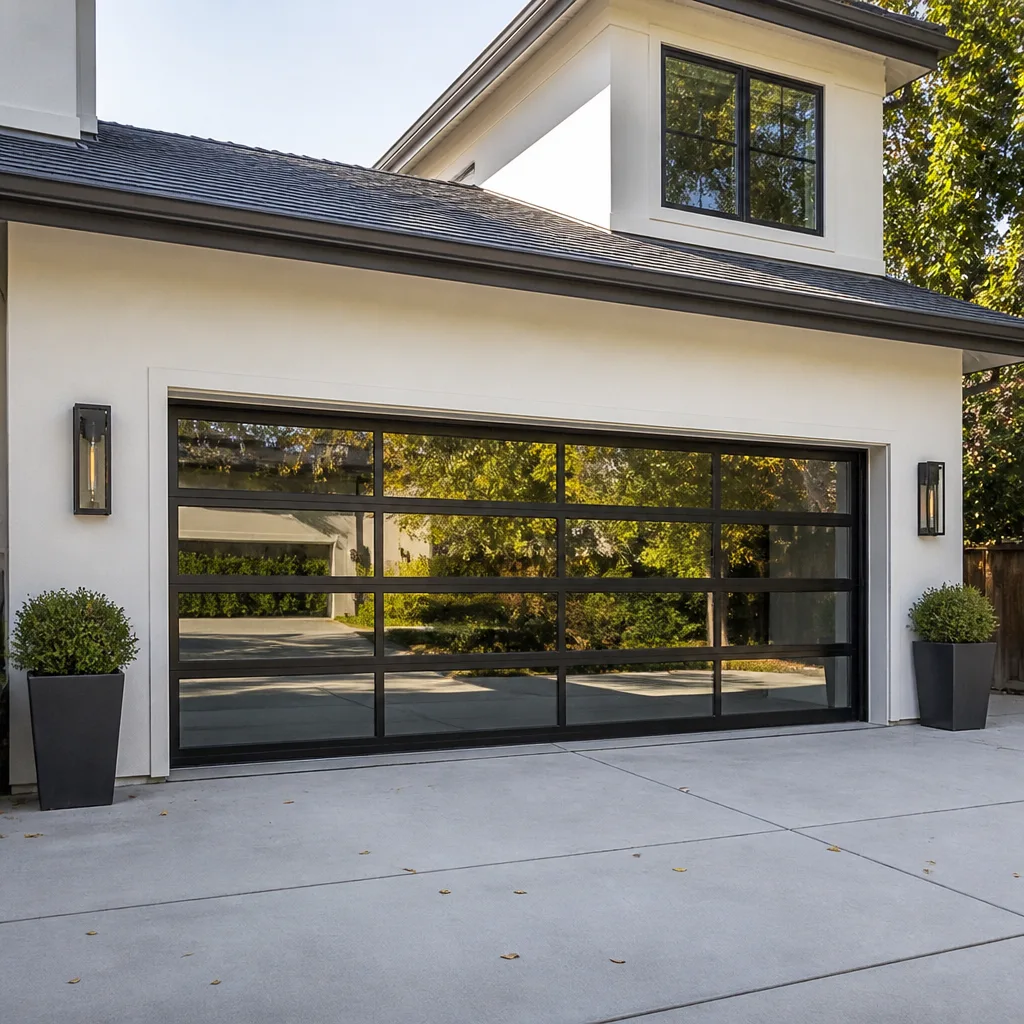 Full-view glass
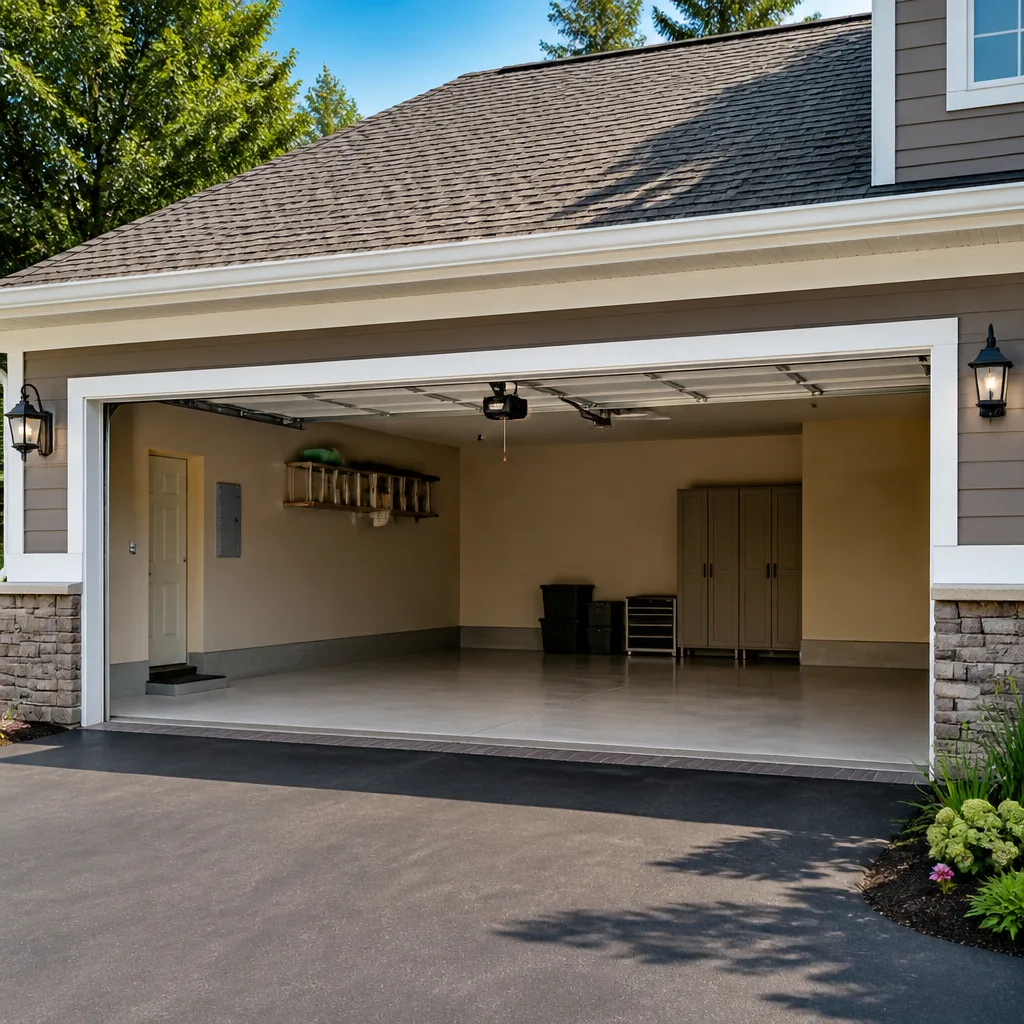 LiftMaster openers
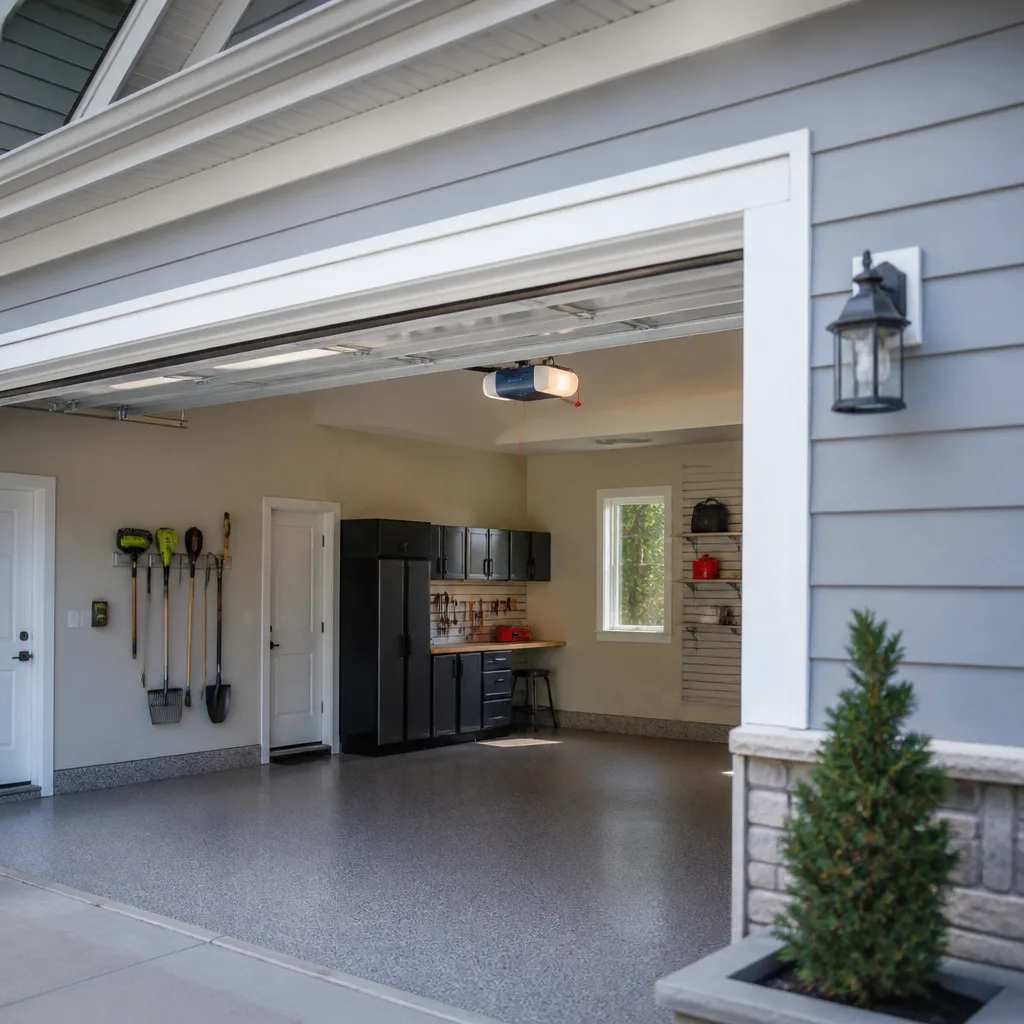 Chamberlain openers
Full 25-point door and opener safety check with every visit - springs, cables, rollers, tracks, and your LiftMaster or Chamberlain opener included
You get a price before we start. It does not change when the pro arrives.
Get your free estimateDIY vs Professional Garage Door: The Woodbridge Homeowner’s Decision Guide
Most garage door advice treats the whole machine as radioactive: touch nothing, call someone. The reality is narrower and easier to work with. A torsion spring under load can store enough energy that an unexpected release causes a bone-fracturing injury, and no video can give your hands the feel and control that job demands. But lubricating rollers and tracks, swapping bottom weatherstripping, aligning safety sensors, or programming a keypad on a LiftMaster or Chamberlain opener needs no special tools and carries no meaningful risk. The trick is knowing which side of that line a task sits on before you start.
This guide draws the line task by task, using the conditions Woodbridge homeowners actually deal with, so your decision rests on real risk and real cost instead of general caution or false confidence.
Quick Answer
Safe DIY tasks are the low-energy ones: weatherstripping, sensor alignment, remote and keypad programming, lubrication, and light cleaning. Tasks involving torsion springs, cables, drums, and track alignment on a spring-loaded door belong to a trained technician, because the stored energy and blind spots make mistakes expensive and sometimes dangerous.
If you’re unsure which category your repair falls into, describe the symptom to us at (833) 762-7918 and we’ll tell you honestly whether it’s a homeowner job or a technician job.
Styles & brands we work with
- Raised-panel steel
- Carriage house
- Modern flush
- Full-view glass
- LiftMaster openers
- Chamberlain openers
Table of Contents
- The Real Split: Energy, Not Skill
- The Physics of a Torsion Spring Failure
- Tasks That Are Genuinely Safe for Homeowners
- Tasks That Require a Technician
- Cost and Benefit: DIY vs a Service Call in Woodbridge
- When a “Simple” DIY Fix Creates a Downstream Failure
- How to Prep Before the Technician Arrives
- Reading These Woodbridge Housing and Climate Clues
The Real Split: Energy, Not Skill
Skill is a poor way to sort garage door tasks. Plenty of mechanically confident homeowners in Woodbridge could follow the mechanical sequence of a spring swap. What stops them is not coordination. It is that the component holds force with no warning and no reset. When you separate tasks by how much stored energy is present and whether a mistake is reversible, the list sorts itself.
Here is the working principle we use:
- Low-energy, reversible tasks: if you can stop halfway and nothing bad happens, it’s a homeowner job.
- High-energy, irreversible tasks: if an error releases force immediately and cannot be undone, it’s a technician job.
- Structural tasks: anything that changes how the door hangs, travels, or balances belongs to a technician even when the door is quiet and still.
This is also why “I watched a video and it looked easy” is a false signal. Video shows the motion but none of the force you’d be holding back. A door that closes without drama on a Tuesday in Woodbridge can be two turns of a drum away from unpredictable. Sorting by energy instead of by confidence keeps you out of that gap.
The rest of this guide puts specific jobs on each side, then looks at what a service call costs, what a DIY attempt actually costs once tools and time are counted, and how to work with a pro efficiently when the job is theirs.
The Physics of a Torsion Spring Failure
A torsion spring is a metal coil wound tight so it can hold the full weight of your door balanced. When you raise the door, the spring gives back that stored energy slowly, which is what lets you lift 150 to 200 pounds of door with one hand. When the spring breaks, that same energy releases in an instant with nothing holding it back.
A few plain-language points make the risk concrete:
- Springs are wound, not just installed. Each turn is stored force. The winding bars a technician uses hold the coil while it is under tension; a screwdriver or the wrong-sized bar can slip out of the winding cone.
- The failure can happen when it’s being worked on. Springs also break on their own with age and metal fatigue, but the highest-risk moment for a homeowner is during adjustment, not after.
- Both spring setups carry force. Torsion springs sit on a shaft above the door; extension springs above the tracks store force as well. Neither is a place to improvise.
- Cables multiply the hazard. Cables are under tension from the springs and can snap free if a drum lets go or a bracket shifts.
We handle garage door spring repair as a core service because it is genuinely one of the highest-risk jobs in the trade, not an upsell. When a spring breaks, the sensible move in Woodbridge is to stop using the door, keep clear of the shaft, and call a technician rather than diagnose it with your own hands.
Tasks That Are Genuinely Safe for Homeowners
Several jobs on a garage door are ordinary home maintenance, and doing them yourself is a reasonable choice for a careful homeowner. These tasks involve no stored spring energy, need only common tools, and are reversible if you make a mistake.
- Bottom weatherstripping and side seals. A cracked or hardened bottom seal lets water and drafts in. It slides into a channel or pulls off a retainer and is replaced with a matching profile. Hand tools only, no force involved.
- Safety sensor alignment. If the door reverses or refuses to close, the photo-eye sensors near the floor may be misaligned or dirty. Wipe the lenses and check that both sensors face each other. A small bracket adjustment fixes most cases.
- Remote and keypad programming. Adding a remote or changing a code on a LiftMaster, Chamberlain, or Craftsman opener is a button sequence, nothing more. The manual walks you through it, and it doesn’t touch the door mechanism.
- Lubrication. Rollers, hinges, and the track need periodic lubrication. A garage-door-rated lubricant, applied to the moving joints and not to the flat surface of a plastic roller, keeps the door quieter and lets it travel more smoothly.
- Track cleaning and light debris removal. Clearing leaves, grit, and cobwebs from the tracks is safe and helps the rollers run cleanly.
- Cosmetic touch-ups. Repainting trim, tightening a loose handle, or replacing a light bulb in the opener housing are simple and reversible.
- Visual inspections. Look for frayed cables, stretched springs, loose hinges, a sagging bottom panel, or a door that’s no longer centered between the tracks. Looking costs nothing and tells you when to call for an assessment.
If you tackle any of these, be clear with yourself about the line. Once a job has you near the spring shaft, cables, or the drums, stop. When you want a trained pair of hands for the rest, look to garage door repair to take over. The person who changed the weatherstripping should not also try to tension the spring.
Tasks That Require a Technician
These are the jobs where the energy-and-reversibility rule points clearly away from a homeowner. They involve parts that hold force, parts that carry the door’s weight, or systems where an error shows up later as a much bigger failure.
- Spring replacement and adjustment. Torsion and extension spring work both carry high stored energy. Winding a spring requires the right bars, a careful two-point technique, and the ability to read the coil. This is the first line a homeowner should not cross.
- Cable tension, replacement, and drum work. Cables are under spring tension and can whip if a drum lets go. Replacing a cable often means relaxing the spring first, which returns you to the spring job.
- Track realignment on a spring-loaded door. Bending or shifting a track sounds harmless, but on a balanced door it can pinch a roller, stall travel, or force the door to bind. A small track shift can hold a panel assembly in a position it shouldn’t be.
- Panel replacement and door installation. Panel weights and stacking order matter for balance. Installing a new door means setting springs, sizing the hardware, and dialing the balance correctly.
- Opener repair and troubleshooting that touches wiring. Electrical diagnosis is a technician job. The opener is wired into mains power, and its logic board, capacitor, and force settings interact with the door’s balance.
- Safety reverse testing that needs recalibration. If the door won’t pass a reverse test after adjustment, a technician needs to test and reset the force and limit settings.
On the opener side, we work on LiftMaster, Chamberlain, Genie, Craftsman, and Raynor equipment, including smart-home connected systems, so a call for garage door opener repair covers both legacy and newer units. Our technicians have up to 12 years of experience, and all of it is spent on doors and openers rather than a bit of everything.
Cost and Benefit: DIY vs a Service Call in Woodbridge
For the safe tasks on the homeowner list, DIY is often the sensible route. The parts are cheap, the tools are already in most garages, and the work takes an hour or less. A typical bottom weatherstrip seal costs roughly $20 to $45 in the Woodbridge market, a new remote runs about $25 to $50, and a keypad around $30 to $60, with no special tools needed for any of them. Doing them yourself saves a call-out fee for work that carries no meaningful risk.
Cost comparison by task:
- Weatherstripping: part cost in the range above, an hour of your time, versus a small service call. DIY-friendly.
- Sensor alignment: free, ten minutes, no risk. DIY-friendly.
- Remote or keypad programming: part cost only, a half hour with the manual. DIY-friendly.
- Lubrication: a few dollars for the right lubricant, twenty minutes. DIY-friendly.
- Spring replacement (one spring): a service call with the work done right, versus the risk of injury. Not a reasonable DIY. A matched pair of springs is usually replaced together, so a pair costs about twice a single spring’s estimate, because the two are wound to balance the door as a set.
- Cable work, track realignment, opener diagnosis: service call, no sensible DIY path.
For any planned service work, the price is quoted and agreed before anything starts, so you know the number before a technician touches the door. For the tasks you’d rather hand off, call (833) 762-7918 for a free estimate. We’re upfront about which jobs are worth doing yourself and which ones need us, because advising a Woodbridge homeowner to keep safe tasks in-house is part of doing the job honestly.
When a “Simple” DIY Fix Creates a Downstream Failure
The most expensive garage door problems usually start as a well-intentioned adjustment. A homeowner in Woodbridge notices the door is slow or uneven, tightens a spring by a few turns, and the door seems fine for a while. What they’ve done is throw a balanced system off its balance point. The opener now has to work harder, its force settings strain, the motor wears faster, and eventually the opener board fails or the door binds on one track.
Three patterns come up again and again:
- Spring tension “adjusted” to fix a slow door. A door that’s slow or heavy usually has a failing spring, worn rollers, or an opener problem, not springs that need a few extra turns. Adding tension overcorrects, and a door that’s too tight is hard on the opener and the panels.
- Track pushed back into place by hand. A bent track that’s forced straight can sit slightly out of alignment, which pinches a roller and loads the door unevenly. The visible fix hides a problem that shows up as a stuck door or a worn hinge later.
- Safety reverse disabled to stop nuisance reversals. When the door keeps reversing, the temptation is to pull the sensor or bypass the test. That removes a protection that exists to keep someone from being caught under a closing door. A trained technician should diagnose the reverse issue instead.
The pattern in each case is the same: a small adjustment fixes a symptom without addressing the cause, and the bigger failure costs more than the original repair. If you’re unsure whether a symptom is a DIY fix or the start of a technician job, describe it to us and we’ll sort it out before you touch anything.
How to Prep Before the Technician Arrives
When you’ve decided a job is a technician job, there’s still real value in prepping. Clearing the area and gathering information cuts billable time and makes the visit more efficient. It also means the technician arrives ready to work on the door instead of moving boxes.
- Clear the garage floor under and around the door. This gives the technician room to work and get a ladder into position safely.
- Note the door and opener brands and model numbers. A note with the brand on the spring shaft, the opener model, and any sticker details helps confirm parts before the visit.
- Describe the symptom precisely. “The door stops halfway up and reverses” or “the door is heavy to lift by hand” tells a technician more than “the door is broken.”
- Take a photo of the spring and opener. A clear photo of the spring and shaft area tells us a lot before we arrive.
- Mention any recent adjustments. If you tightened anything, moved the sensors, or changed the opener settings, say so. That history changes the diagnosis.
- Keep children and pets out of the garage during the visit. A door that’s mid-repair isn’t a place for them, and it lets the technician focus.
If your door is stuck open and the garage needs securing, say that when you call. We offer dedicated emergency garage door service for situations where access and security can’t wait, and we can work with you on scheduling.
Reading These Woodbridge Housing and Climate Clues
Woodbridge’s mix of townhomes, older single-family homes, and newer construction gives a homeowner useful clues about what’s likely to fail. The area’s humid summers and freeze-thaw swings in winter are hard on weatherstripping, seals, and metal hardware, and a door that lived through a few of those cycles tells you where to look first.
A few local patterns worth knowing:
- Older doors and hardware: doors installed in the 1990s and early 2000s commonly use standard torsion systems and older openers. If your door is older and still on its original springs, weatherstripping, and opener, budget for replacement rather than repair.
- Seasonal seal wear: Woodbridge’s winter freeze-thaw accelerates weatherstripping failure at the bottom seal. That cracked seal is a safe DIY replacement.
- Opener age and balance: a slow or labored door is a balance signal, not a sign you need to tighten the springs. Treat it as a technician question.
- Mixed brands in the neighborhood: you’ll see LiftMaster, Chamberlain, Craftsman, and Raynor systems throughout Woodbridge. When calling, tell us the brand so the technician arrives with the right diagnostic approach.
If you spot a problem you can’t categorize, call (833) 762-7918 and describe it. We’ll tell you honestly whether it’s a homeowner job or a technician job, and for anything a technician should handle, we can connect you with a local garage door professional who’ll give you a written, agreed quote before starting.
Common Mistakes to Avoid
- Using the wrong winding tool on a torsion spring. A screwdriver or undersized bar can slip from the winding cone while the spring is loaded. Use the correct bars and let a trained technician do the winding.
- Adjusting spring tension to fix a slow door. Slow or heavy operation usually points to a failing spring, worn rollers, or an opener issue. Adding tension masks the symptom and wears the opener faster.
- Forcing a bent track back by hand. A track that’s forced straight can sit out of alignment, which pinches a roller and loads the door unevenly. Track work on a spring-loaded door belongs to a technician.
- Disabling the safety reverse to stop nuisance reversals. Pulling the sensor or bypassing the reverse test removes the protection that keeps someone from being caught under a closing door. Diagnose the reverse issue instead.
- Lubricating rollers and springs with the wrong product. Household grease and generic sprays attract grit and gum up moving parts. Use a garage-door-rated lubricant on the joints.
- Ignoring a broken spring and using the door anyway. A door with a broken spring is unbalanced and dangerous. Keep it closed, keep clear of the shaft, and call a technician rather than testing it by hand.
- Trying an unfamiliar brand on your own. If your opener or door is an unfamiliar brand or a connected smart system, the specific settings matter. A technician who works on that brand saves you the guesswork.
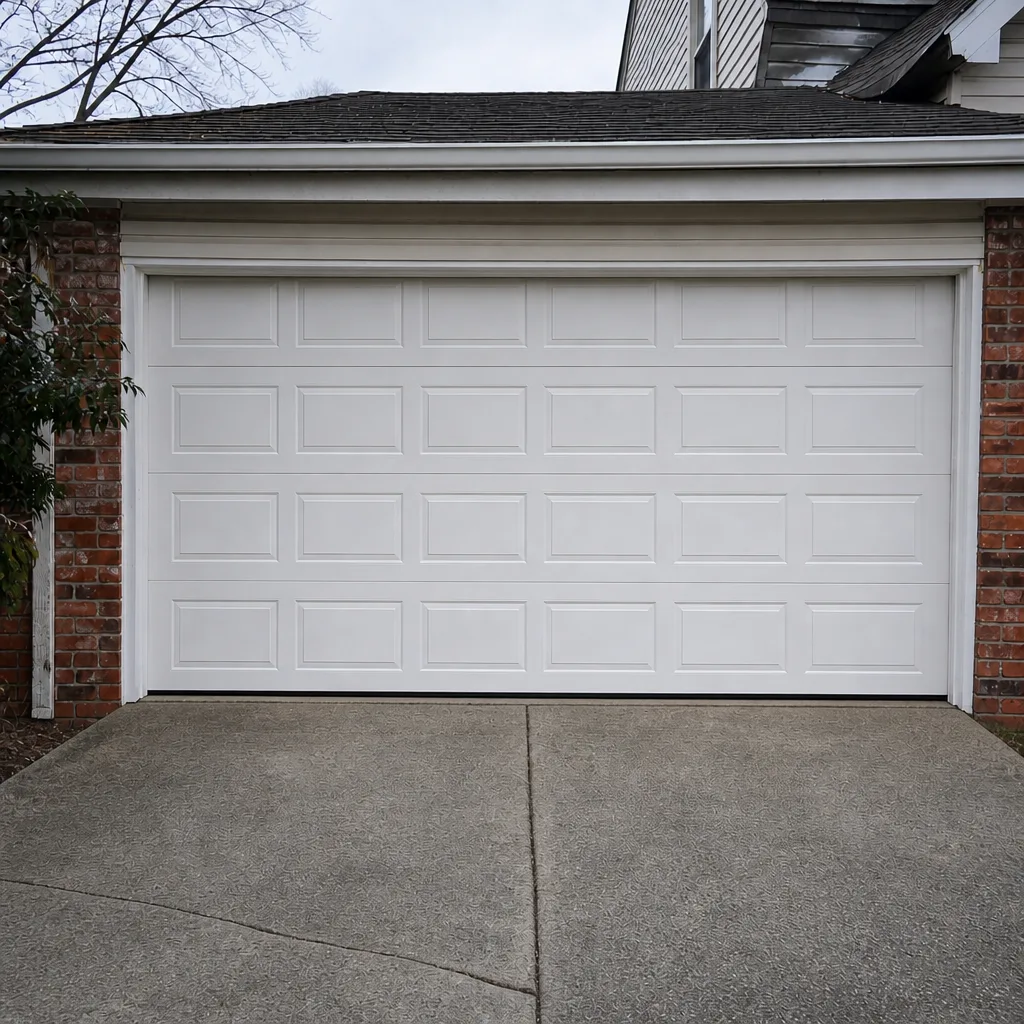
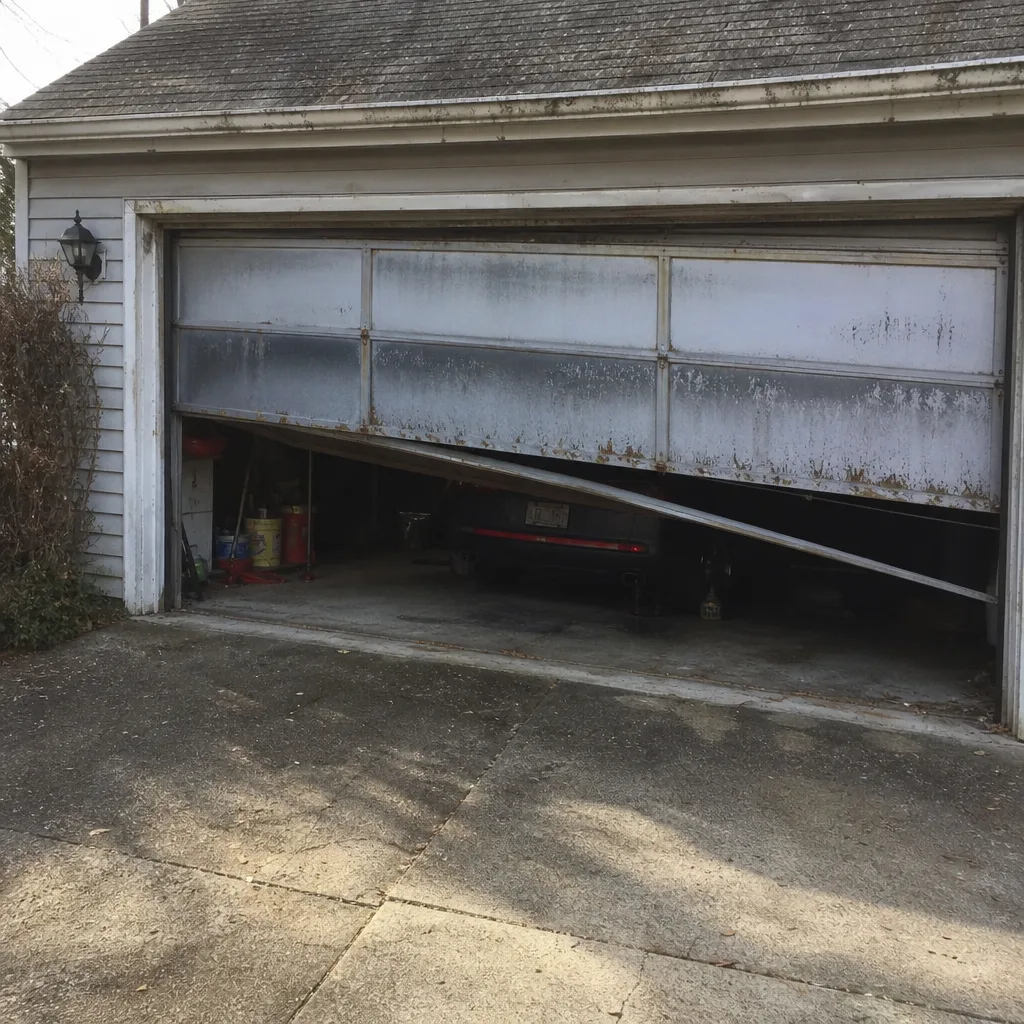
See the difference
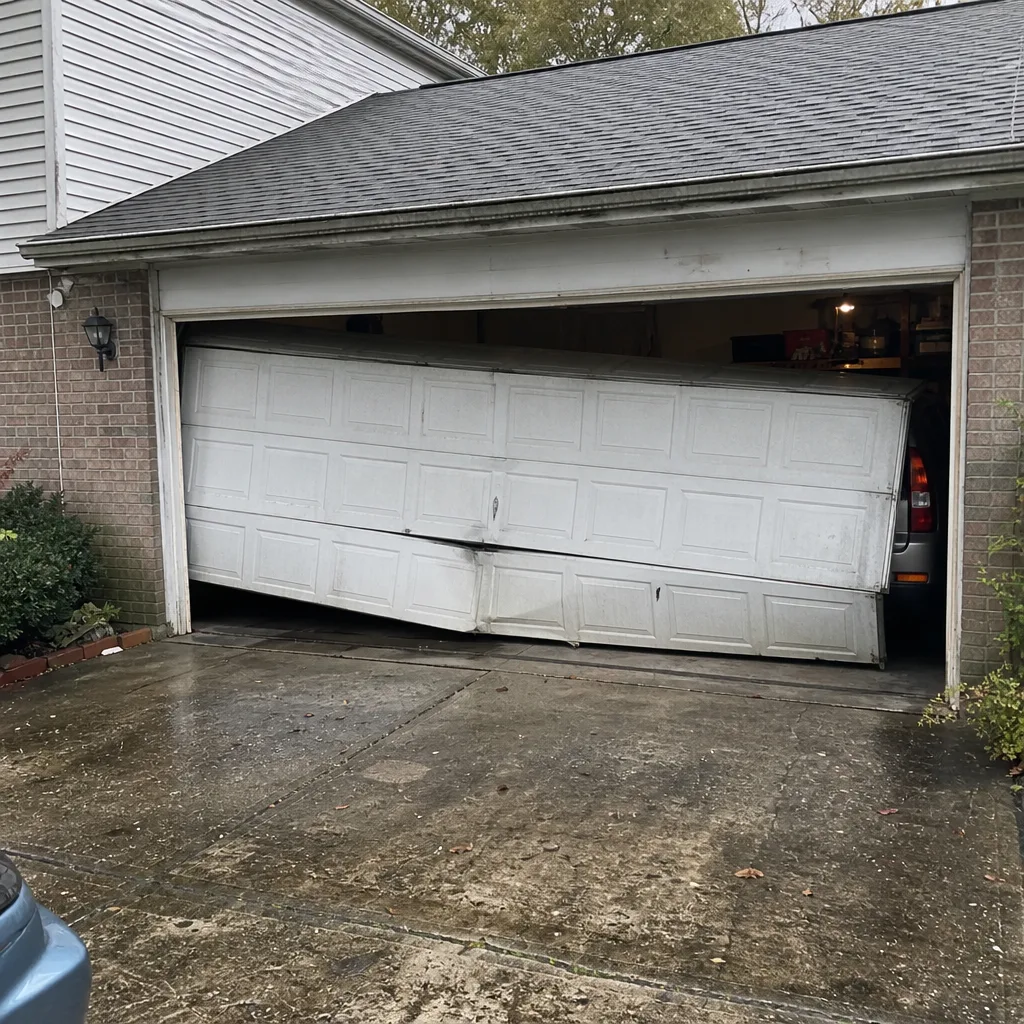 Before
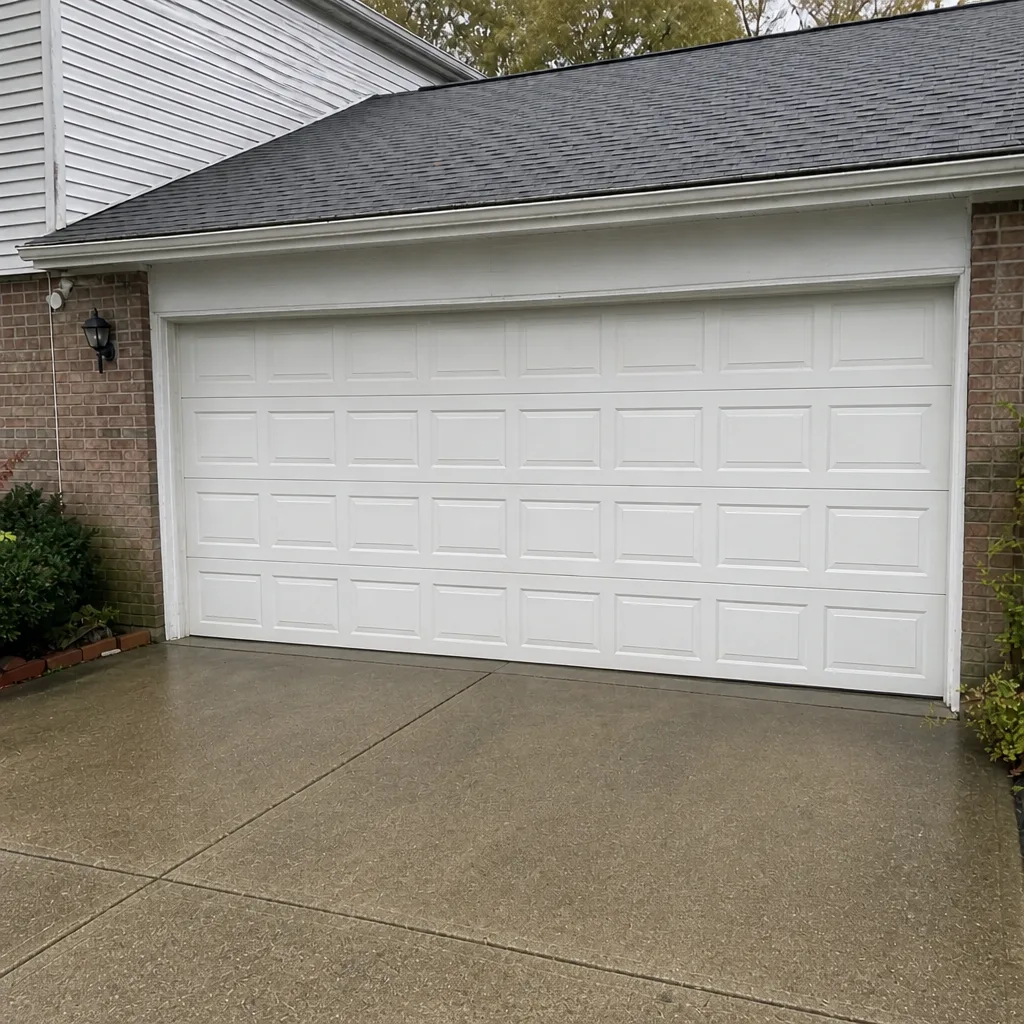 After
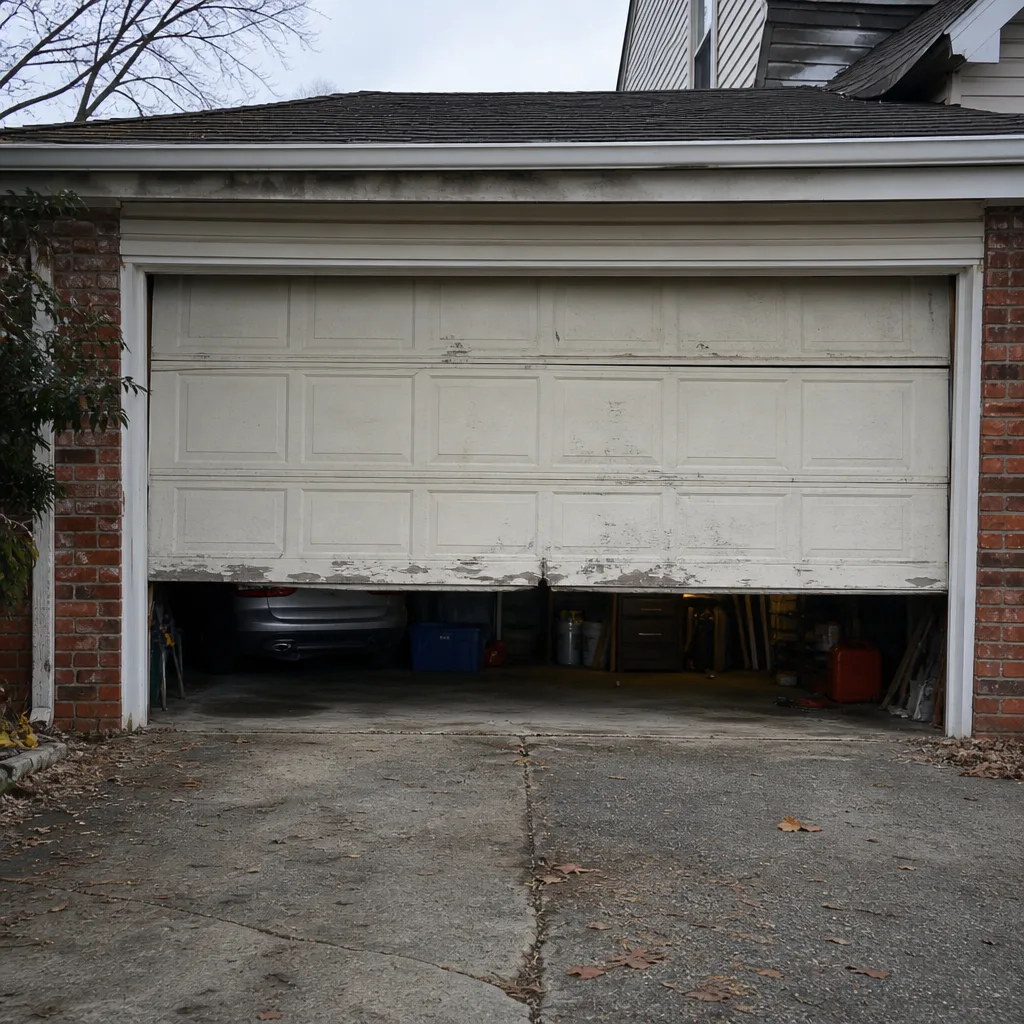 Before
 After
 Before
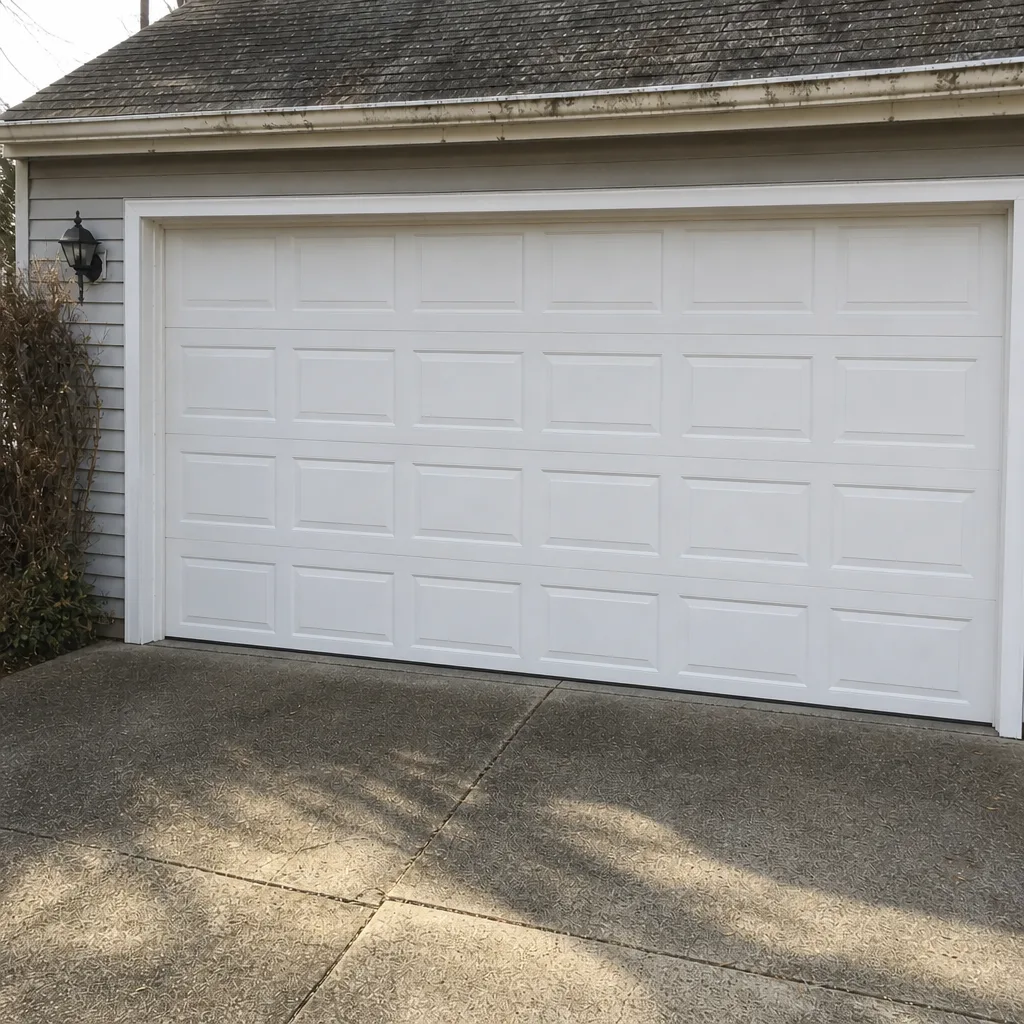 After
When to Call a Professional
Call a professional the moment a repair touches the spring shaft, the cables, the drums, or the door’s balance. That includes a broken or sagging spring, a door that’s heavy or hard to lift, a snapped cable, a track that’s shifted or bent, and any attempt to “reset” a door that won’t stay open. It also includes opener failures that involve electrical diagnosis, and any door that won’t close when the garage needs securing. Keep your safety reverse and sensor systems working and don’t disable them; that’s a technician’s call when something fails the test. For anything in that list, stop and call. Woodbridge Garage Door Repair Experts offers free estimates in Woodbridge – call (833) 762-7918.
Frequently Asked Questions
The safe homeowner jobs are weatherstripping, safety sensor alignment, remote and keypad programming, lubrication, and light track cleaning. These involve no stored spring energy, need only common tools, and are reversible if something goes wrong. Anything near the spring shaft, cables, or drums is a technician job.
A torsion spring stores enough energy to cause a bone-fracturing injury when it releases unexpectedly, and the winding process is the highest-risk moment. We handle spring replacement with the correct bars and technique for that reason. A door with a broken spring should stay closed and untouched until a technician arrives.
The price for spring work is quoted and agreed before anything starts, so you’ll know the number before a technician touches the door. A single spring estimate covers one spring, and a matched pair is usually replaced together, so a pair costs about twice that. We don’t recommend a DIY path for spring work regardless of price. Call (833) 762-7918 for a free estimate.
Check that the safety sensors are aligned, clean, and facing each other, and that nothing blocks the path. If the door still reverses after that, the force or limit settings need diagnosis, which is a technician job. Don’t disable the reverse feature to get the door closed.
No. A slow or heavy door usually points to a failing spring, worn rollers, or an opener that’s working too hard, and none of those are solved by tightening the springs. Adding tension masks the symptom and wears the opener faster. Have a technician check the balance.
Clear the floor under and around the door, note the door and opener brands and model numbers, describe the exact symptom, and mention any adjustments you’ve made recently. A photo of the spring and opener area helps. That prep cuts billable time and gets the repair moving faster.
The Bottom Line
The DIY question isn’t about how handy you are. It’s about stored energy. Weatherstripping, sensor alignment, remote and keypad programming, and lubrication are safe homeowner tasks that save a call-out. Spring work, cable and drum jobs, track realignment, and electrical opener diagnosis belong to a trained technician because the force involved can’t be undone by caution once it’s released. Woodbridge homeowners get the best result by keeping the safe tasks in-house and calling for the rest. Our technicians have up to 12 years of experience, and every planned job is quoted and agreed before work starts. Call Woodbridge Garage Door Repair Experts at (833) 762-7918 for a free estimate.
Written by the team at Woodbridge Garage Door Repair Experts.