Last updated November 23, 2026
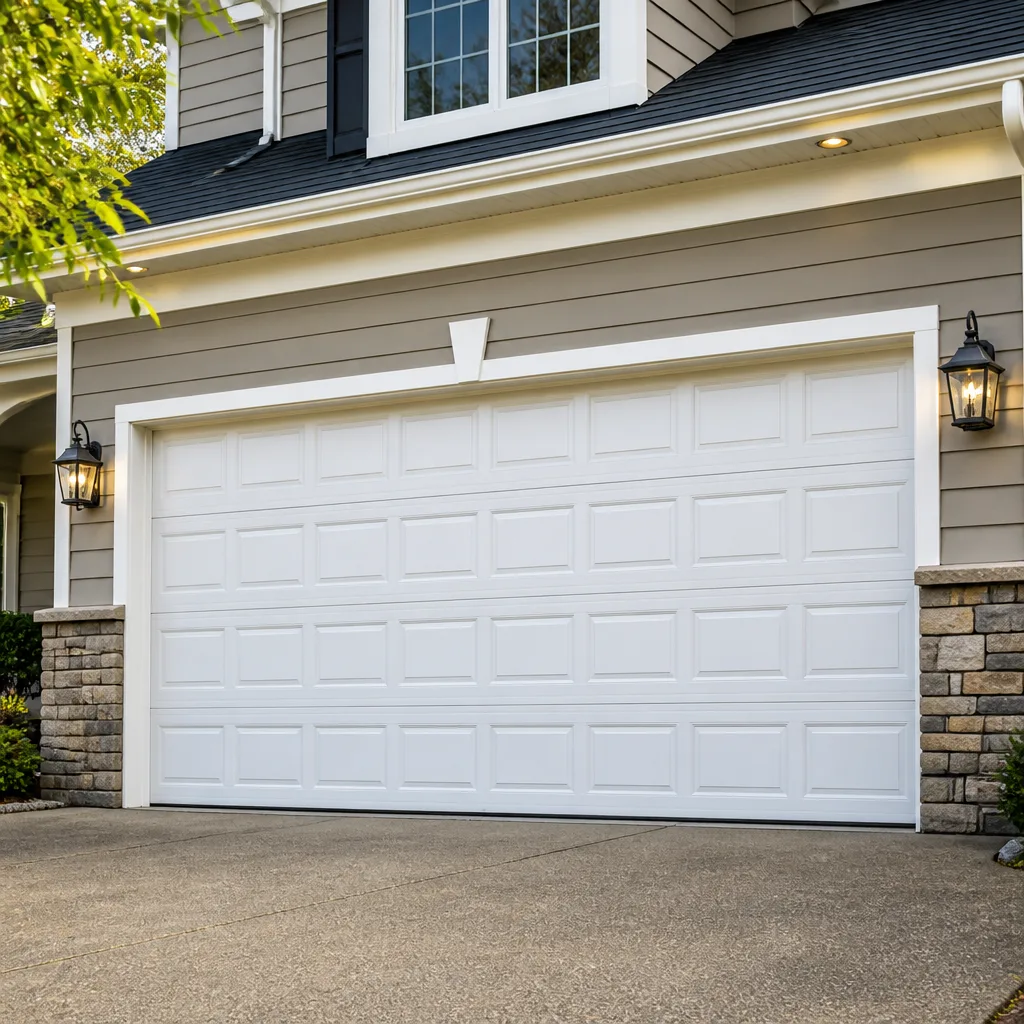 Raised-panel steel
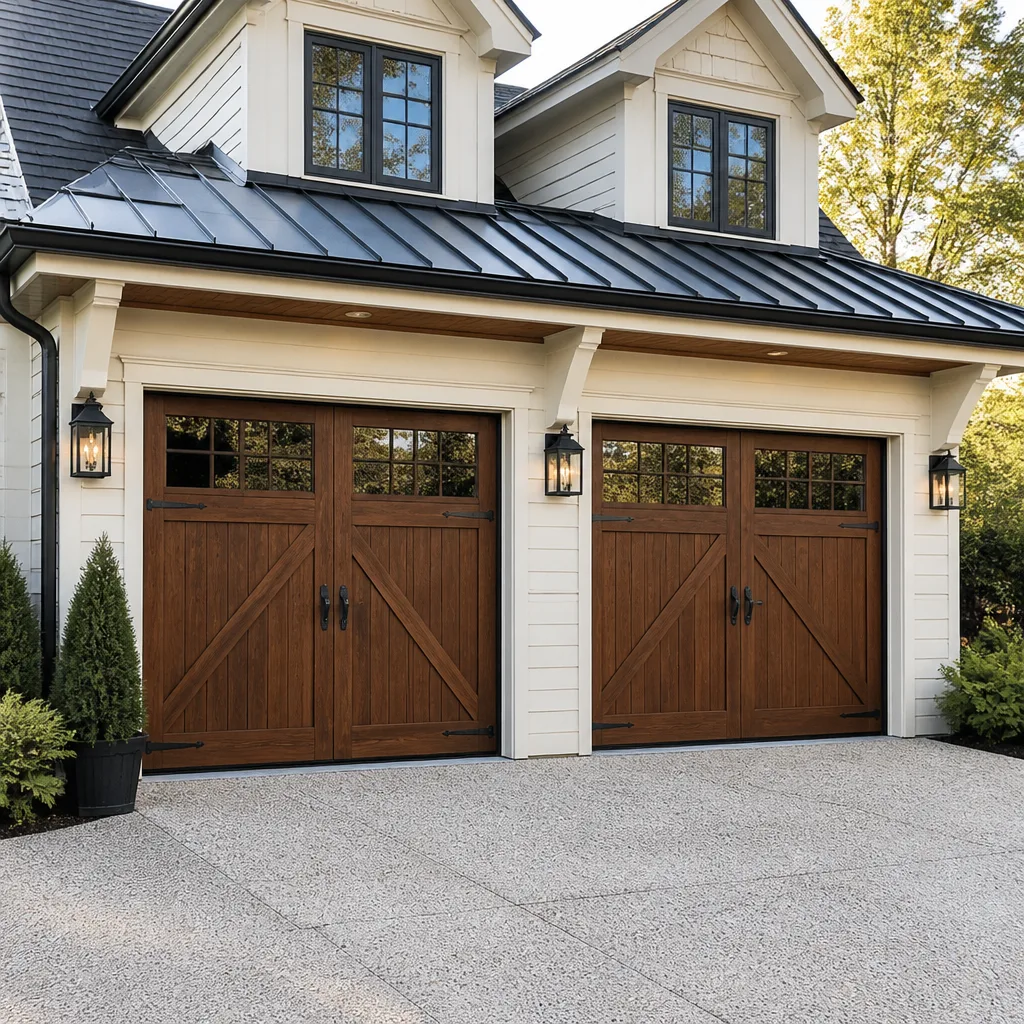 Carriage house
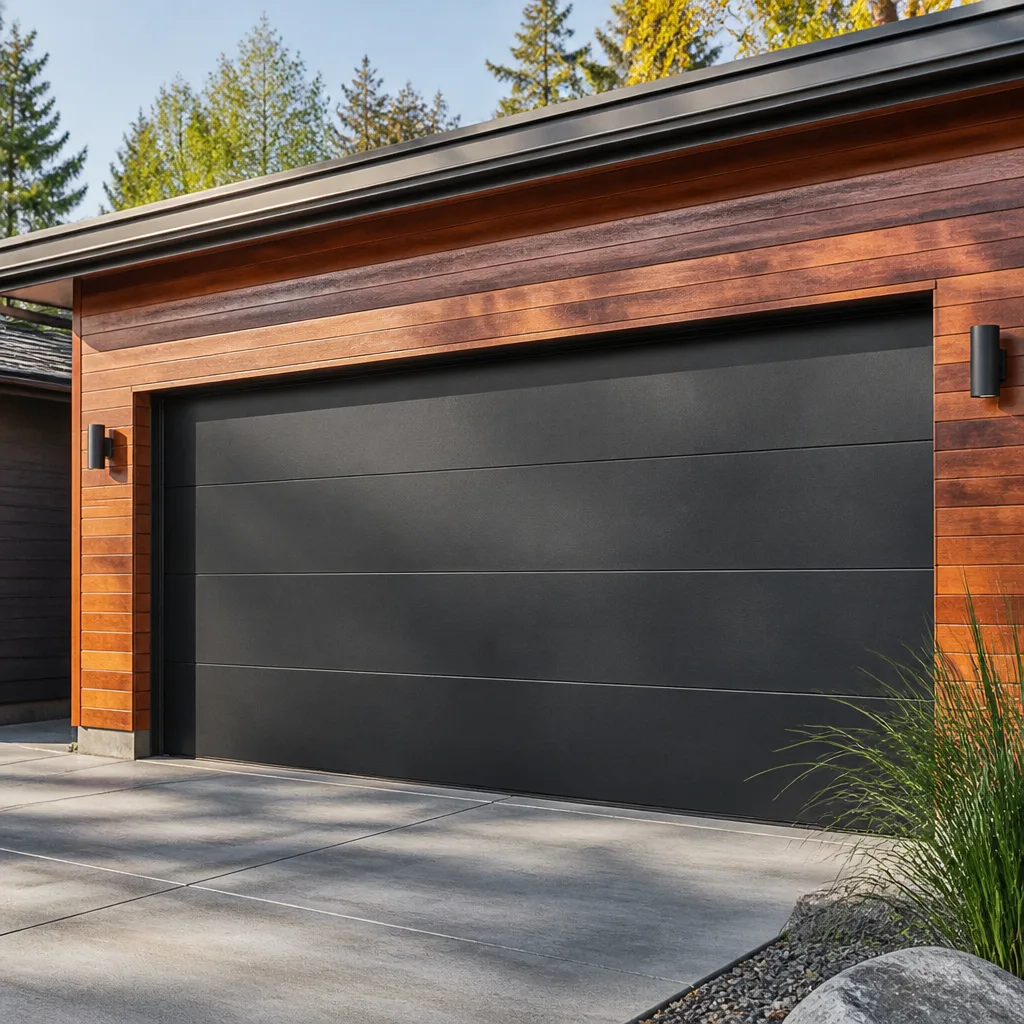 Modern flush
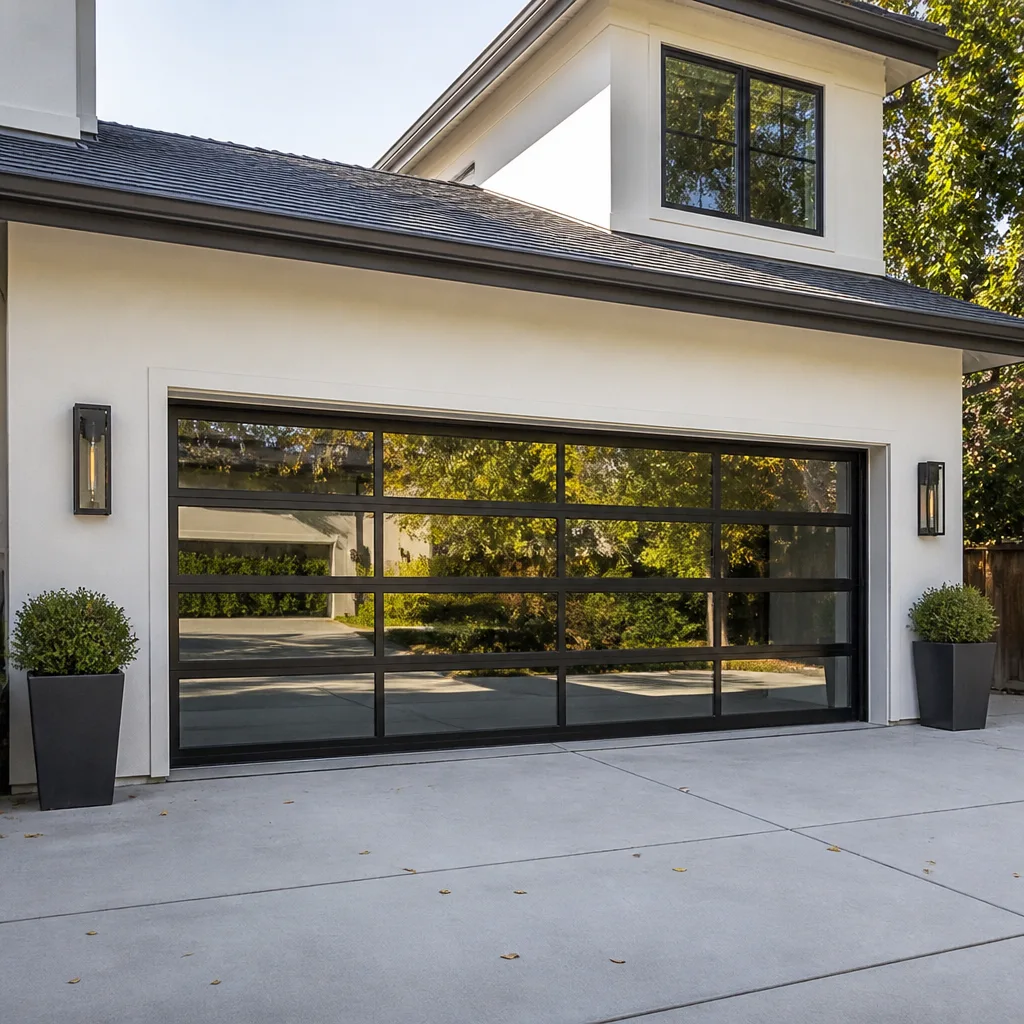 Full-view glass
 LiftMaster openers
 Chamberlain openers
Full 25-point door and opener safety check with every visit - springs, cables, rollers, tracks, and your LiftMaster or Chamberlain opener included
You get a price before we start. It does not change when the pro arrives.
Get your free estimateGarage Door Warning Signs: A Woodbridge Homeowner’s Reference Guide
A garage door that hesitates for two seconds before moving isn’t “just getting old.” It’s a specific symptom, and it points to one of two things: a motor that’s lost torque or a track that’s fighting the rollers. Both have the same eventual failure mode, and it ends with the door stopping halfway and your car trapped inside. Most homeowners in Woodbridge read the early signs right past their own dashboard. This guide is built as a triage reference, so you’ll know which symptoms are cosmetic and safe to watch, which are mechanical and worth scheduling, and which are safety-critical and mean you should stop using the door today.
Quick Answer
The warning signs that matter most are: a door that reverses on its own, a snapped spring with a visible gap in the coil, a frayed or slack cable, and a door that won’t stay up when you lift it halfway. Those are stop-using-it signals. Noises, slow travel, and minor cosmetic wear are earlier warnings you can monitor and schedule around. The single best check is a 60-second balance test that reveals spring wear before a spring lets go.
Styles & brands we work with
- Raised-panel steel
- Carriage house
- Modern flush
- Full-view glass
- LiftMaster openers
- Chamberlain openers
Table of Contents
- The Severity Index: Sorting Symptoms Into Three Tiers
- The Noise Diagnostic: What Grinding, Squealing, Rattling and Banging Actually Mean
- Visual Signs in Woodbridge’s Older Housing Stock
- Opener Behavior as a Diagnostic Tool
- The 60-Second Balance Test
- Seasonal Patterns: Why Failures Cluster at Certain Times of Year
- What Repairs Typically Cost in the Woodbridge Area
- Common Mistakes to Avoid
The Severity Index: Sorting Symptoms Into Three Tiers
The reason homeowners misjudge garage door problems is that the loudest symptom isn’t always the most dangerous one. A banging door sounds terrifying and is often just a loose hinge. A quiet cable that’s beginning to fray sounds like nothing and can drop a door. Before you look at any individual symptom, sort it into one of these three tiers.
Tier 1: Cosmetic (monitor, don’t panic)
- Faint scuffs or paint fading on south-facing panels
- A single squeaky hinge that quiets down after a spot of lubricant
- Minor weather seal gaps at the bottom you can see daylight through
- A keypad or remote that needs a fresh battery
Tier 2: Mechanical (schedule service soon)
- Grinding or squealing that’s getting louder week over week
- Slow travel time or a door that hesitates before moving
- Remote range that’s shrinking even with new batteries
- A door that doesn’t sit flush at the bottom when closed
- Visible slack in a lift cable
Tier 3: Safety-critical (stop using the door now)
- A torsion spring with a visible gap in the coil
- A frayed, kinked, or off-the-drum cable
- The door reverses on its own during close, or won’t reverse when you test it
- A door that won’t stay open at the halfway point
- Any door that has dropped, twisted, or come off a track
When a symptom lands in Tier 3, the right move is to leave the door down and call. Springs and cables hold enormous stored tension, and a door that appears stable can move without warning. Our garage door spring repair work exists specifically because these failures are common and unforgiving when handled without training.
The Noise Diagnostic: What Grinding, Squealing, Rattling and Banging Actually Mean
Noise is the most useful early-warning system a garage door has, but only if you distinguish between the four sounds. Each implicates a different mechanical component, and each has a different urgency clock.
Grinding
Grinding is metal-on-metal, and it usually points to worn rollers, a dry torsion tube, or bearings that have lost their grease. If it’s coming from overhead, suspect the torsion tube or the center bearing plate. If it’s coming from the sides, look at the rollers and hinges. Grinding tends to escalate. Once it starts, it typically gets louder within a few weeks before something seizes.
Squealing
Squealing is the friendliest of the four. It’s almost always a lubrication issue, whether that’s a dry hinge, a dry roller stem, or a track that’s lost its light coating. A quick spot-check by hand (with the door closed and the opener disconnected) tells you whether the noise is coming from a specific hinge or from the whole system. Squealing rarely means imminent failure, but ignoring it long enough turns a five-minute fix into worn hardware.
Rattling
Rattling during travel often means loose hardware: hinge bolts that have backed off, a track bracket that’s worked loose from the framing, or a panel that’s separating from its stile. In Woodbridge’s older construction, rattling also traces to the wood framing the track is bolted to, which can shrink or soften enough over time to loosen the bolts. Rattling is a Tier 1 to Tier 2 issue depending on how much play you can feel with the door at rest.
Banging
Banging is the loud one and usually the least urgent. It’s almost always a torsion spring that’s lost some of its tension, which lets the door “drop” into position when it hits the floor. In an extension-spring door, it can also mean the springs are stretched near their limit. Banging sounds alarming and rarely indicates imminent structural failure, but it does wear the door’s frame and opener gear faster than a properly balanced door would.
If your door is making any of these sounds and you can’t pin down which component is responsible, our garage door repair technicians can usually identify the source in a single visit.
Visual Signs in Woodbridge’s Older Housing Stock
Woodbridge has a wide range of housing ages, from newer construction to homes built decades ago, and the doors on those older homes show wear patterns that newer doors rarely do. Three visual signs you’ll see on older doors deserve specific attention.
Sagging bottom corners
A bottom corner that’s visibly lower than its neighbor on the same door is usually a hinge or stile issue, not a panel issue. In older steel doors, the bottom hinge can rust at the pivot point, letting the panel sag slightly. On wood doors, it’s often the end stile absorbing moisture at the bottom, where the door meets the concrete. A single sagging corner is a schedule-it problem. Multiple sagging corners along the same edge suggest the door’s frame or track has shifted, which is a bigger correction.
Rust streaking at panel seams
Rust streaks running down from a panel seam usually mean water is getting into the door and pooling at the seam before it drips. This is common on older Clopay and Amarr steel doors whose factory finish has aged past its protective life. The streak itself is cosmetic, but the underlying moisture is not. Left alone, it eats through the panel at the seam, and a rusted-through panel compromises the door’s structural stiffness.
Cable slack
Cables should be under steady tension at all times. If you can see a cable that looks loose, kinked, or has come partway off its drum, treat it as a Tier 3 issue. Slack in one cable usually means the drum on one side has lost its grip, and the door is now loaded unevenly. Cables are under high tension and can cause serious injury if they slip; don’t attempt to adjust one yourself, even if the fix looks obvious.
One sign specific to older doors: paint flaking off the bottom section in irregular patches, usually the size of a hand. That’s almost always moisture wicking up through the concrete slab and into the door’s bottom edge. The fix is more about sealing the threshold than the door itself, but it’s worth flagging when a technician is out.
Opener Behavior as a Diagnostic Tool
Your opener is telling you more than you think. Three behaviors in particular can point to the exact component that’s failing, before the door itself shows any visible symptom.
Phantom reversals
A door that reverses for no reason mid-close is usually a safety sensor issue, not an opener issue. The sensors sit at the bottom of the track and can be knocked slightly out of alignment, covered by debris, or blocked by a shadow that confuses their infrared beam. In Woodbridge homes with doorways facing west, afternoon sun can also trip the sensors, which is why the reversal tends to happen in late afternoon and not in the morning. Clean and align the sensors first. If the reversals persist with perfectly aligned sensors and no obstruction, the opener’s logic board is the next suspect.
Slow travel
Slow travel or a door that hesitates before moving points to one of two things: a motor losing torque or a track with excess friction. If the door moves slowly in one direction only, it’s usually a motor or limit switch issue. If it’s slow both ways, it’s friction, and the track, rollers, and hinges need attention. A quick test: disconnect the opener and try lifting the door by hand. If it’s heavy or binds, the problem is the door, not the motor. On Chamberlain and Genie units, a slow-travel pattern that develops over weeks often traces to a worn drive gear, which is repairable without replacing the whole unit.
Remote range degradation
A remote that worked from the driveway last year and now only works from ten feet away is usually a battery, but if fresh batteries don’t fix it, the antenna on the opener is the next check. The antenna is a short wire hanging off the opener’s logic board, and it can break or get pinched over time. On smart-home openers like myQ and Genie Aladdin Connect, range can also degrade if the unit’s firmware needs an update. Range problems rarely indicate door failure; they’re an opener-side signal.
Our garage door opener repair service handles both legacy units and modern connected systems, so we aren’t guessing when the issue is a logic board, a drive gear, or a firmware quirk.
The 60-Second Balance Test
This is the most useful diagnostic a homeowner can run, and it takes under a minute. The balance test reveals spring wear weeks or months before a spring breaks, giving you a scheduling window instead of an emergency call.
- Close the garage door fully and disconnect the opener using the manual release cord (the red handle hanging from the rail).
- Lift the door by hand to about halfway up. Use both hands on the bottom edge, and lift from the center.
- Stop lifting and let go. A properly balanced door stays at roughly the halfway point with little or no drift.
- If the door sinks slowly, the springs have lost some tension. That’s an early warning.
- If the door drops immediately or falls quickly, the springs are significantly worn or one is broken. Do not continue testing.
- Reconnect the opener and cycle the door once to confirm it re-engages.
A door that won’t hold at halfway means the springs are no longer carrying the door’s weight. Every opening after that point puts the entire load on the opener’s gear and the door’s frame, which is where the “door stopped halfway and I can’t get my car out” scenario begins. If your test shows sinking or dropping, that’s the moment to schedule service rather than run the door more. Our technicians have up to 12 years of experience reading these early balance signals, and it’s the reason we treat spring replacement as core work rather than a side job.
Seasonal Patterns: Why Failures Cluster at Certain Times of Year
Garage door failures aren’t evenly distributed across the calendar. In the Woodbridge area, they cluster in two windows.
Late summer and early fall
The hottest weeks of the year put the most stress on torsion springs. Springs are under constant tension, and heat causes metal to expand slightly, which changes the tension and wears the coil faster. A spring that’s been weak for a while often fails in this window. The other summer pattern is sensor-related: strong afternoon sun through west-facing doors trips sensors, and homeowners interpret the resulting reversals as a door problem when it’s a sensor alignment issue.
First hard cold snap
The first stretch of freezing mornings is the second pattern. Cold makes metal brittle, and it stiffens the door’s weather seal and rollers, adding friction. Openers built for warmer weather can struggle on the first cold morning, and that’s when a motor with an aging gear or a limit switch that’s drifted slightly will fail outright. Doors that were fine all summer can act up on the first cold morning of the year.
Neither window is a coincidence. If your door is heading into one of them with a Tier 2 symptom unresolved, it’s worth scheduling service before the window arrives rather than after. Our repair service handles the wear patterns both seasons produce.
What Repairs Typically Cost in the Woodbridge Area
Costs below are typical estimate ranges for the Woodbridge area and will vary by door size, opener model, and the specific part. Every job is quoted in writing and agreed before any work begins. The written estimate is the price.
- Single torsion spring replacement: typically $180 to $340 for one spring. Most doors with a matched pair are replaced together, which runs about double that range.
- Extension spring replacement: typically $140 to $260 per spring.
- Cable replacement: typically $130 to $250 per cable, plus labor if the drums need attention.
- Roller replacement (full set): typically $100 to $200, higher if the hinges are also worn.
- Track alignment or bracket repair: typically $120 to $280, depending on whether the framing needs correction.
- Opener logic board replacement: typically $180 to $350, varies by brand and model.
- Opener drive gear or motor replacement: typically $200 to $400, higher for myQ or Aladdin Connect units.
- Safety sensor replacement (pair): typically $80 to $180.
These are estimates, not quotes. The written estimate you receive is the price for your job. If a technician finds additional wear during the visit, you’ll hear about it before any work is approved, not on the invoice.
Common Mistakes to Avoid
- Assuming a slow door is just “getting old.” A door that hesitates or travels slowly has a cause. Ignoring it wears the opener faster and turns a cheap fix into an expensive one.
- Lubricating the tracks. Track rails should be clean and dry; lubricant attracts grit and causes the rollers to slide instead of roll. Lubricate the rollers and hinges, not the tracks.
- Adjusting a torsion spring yourself. Torsion springs are under hundreds of pounds of stored tension. Homeowners who try to adjust them by hand are the reason this work requires trained technicians.
- Replacing one spring when the other is the same age. On a matched pair, the springs have the same wear. Replacing one leaves you with a mismatched set that tends to fail at the older one’s timeline.
- Assuming all opener brands are interchangeable. Chamberlain, Genie, and their connected variants each have their own boards, sensors, and remotes. Using the wrong replacement part can damage the logic board.
- Ignoring the balance test because the door still “works.” A door that opens and closes is not the same as a door that’s safe. The balance test reveals wear the door itself is hiding.
- Waiting for a Tier 3 sign to become an emergency. A weak spring with visible wear is a scheduled repair. The same spring that snaps while a car is parked under it is an emergency call.
See the difference
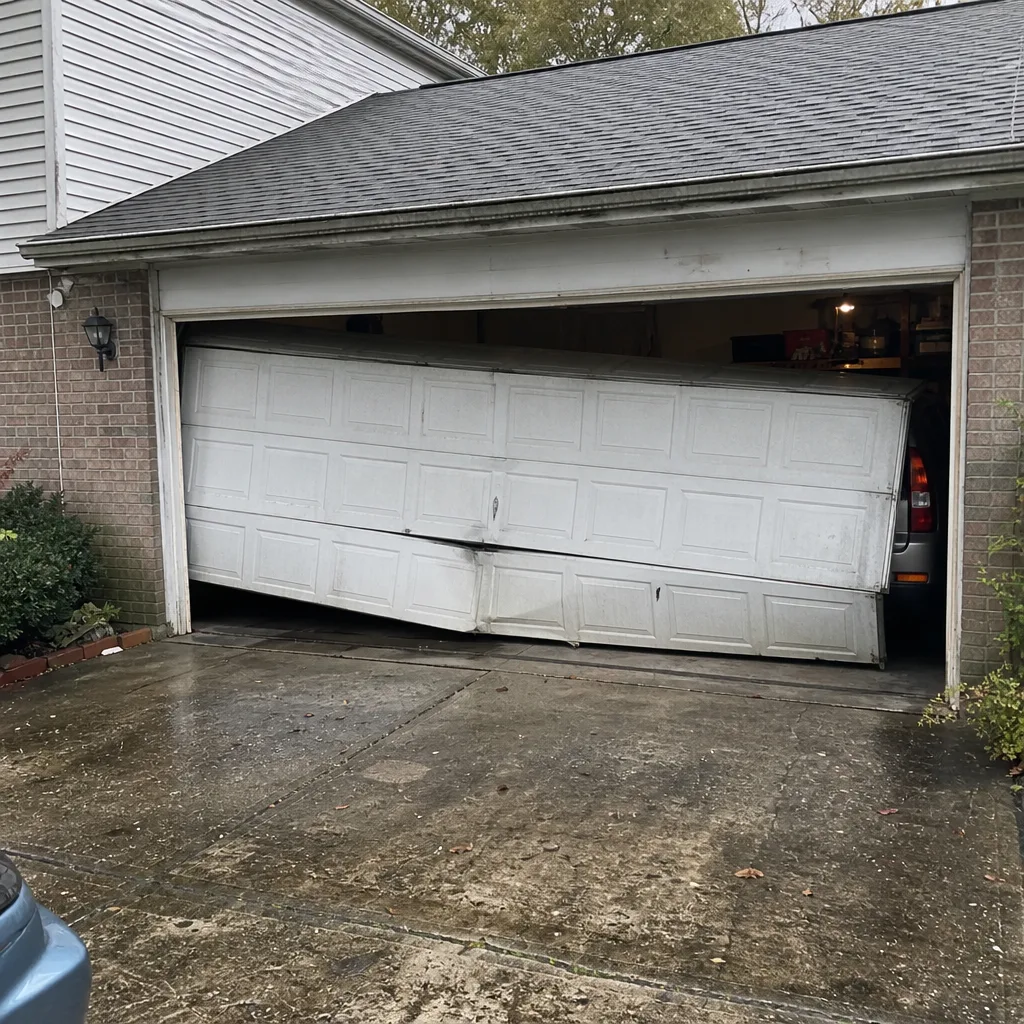 Before
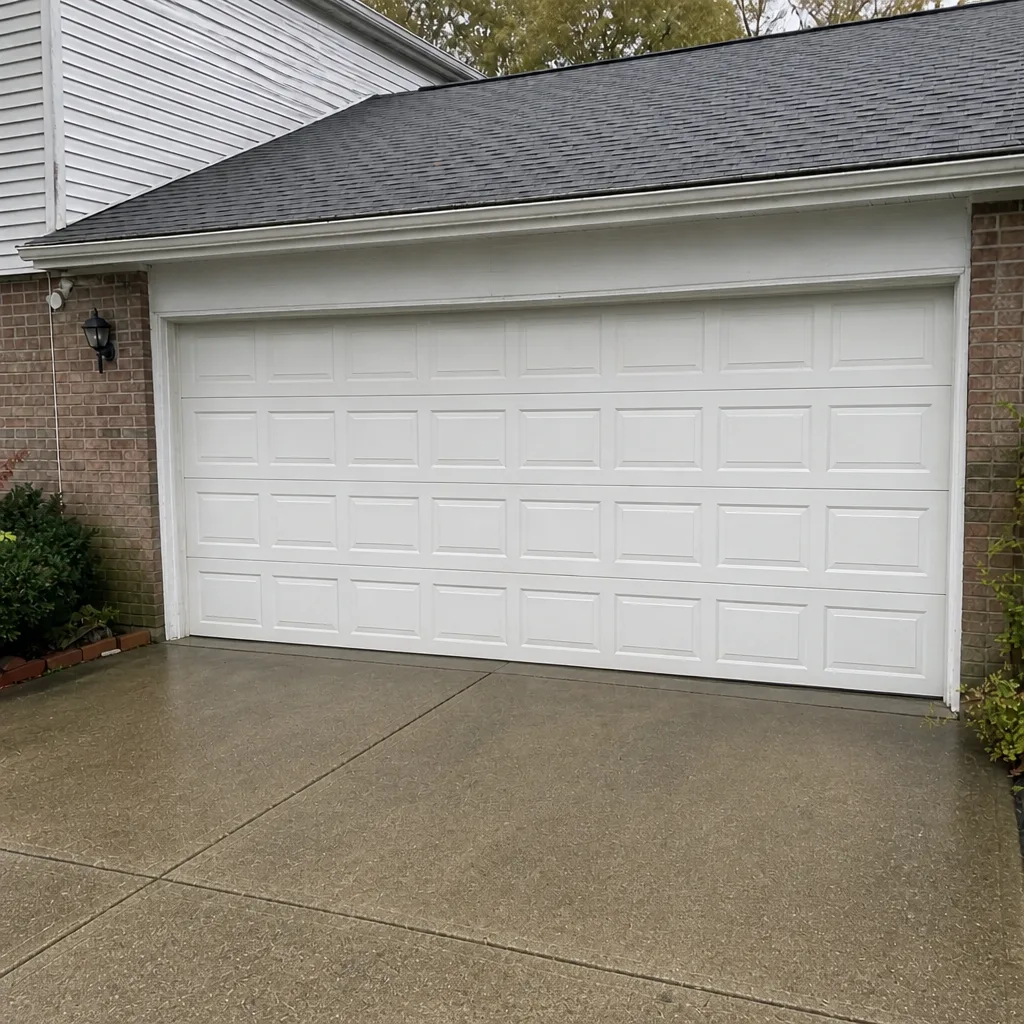 After
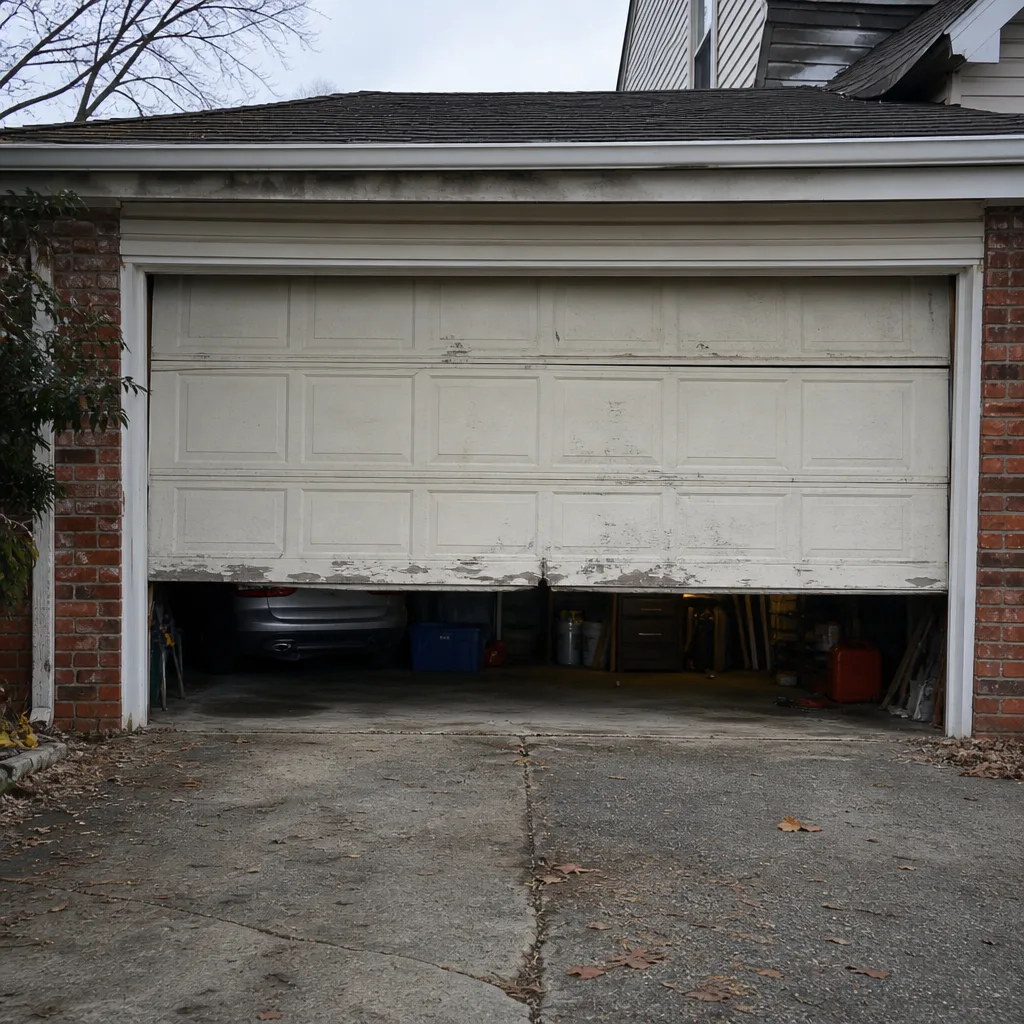 Before
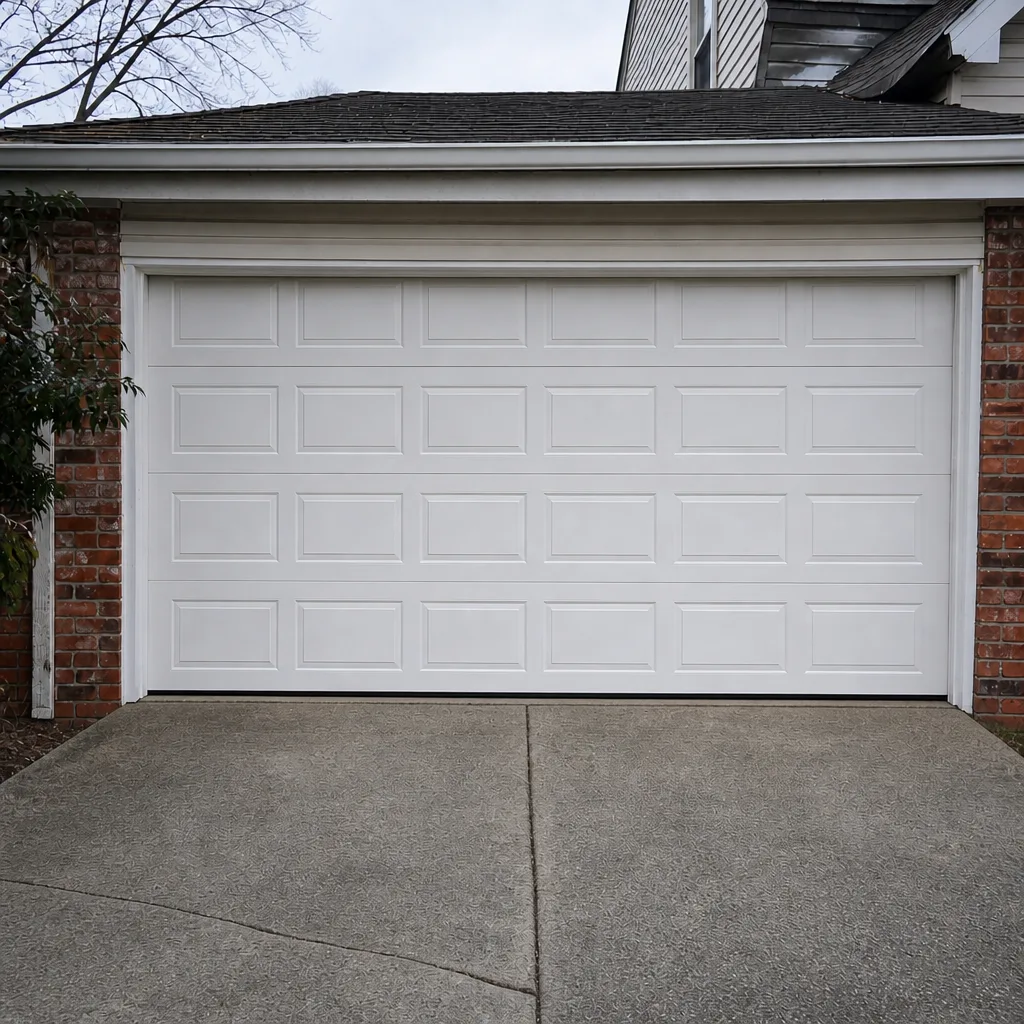 After
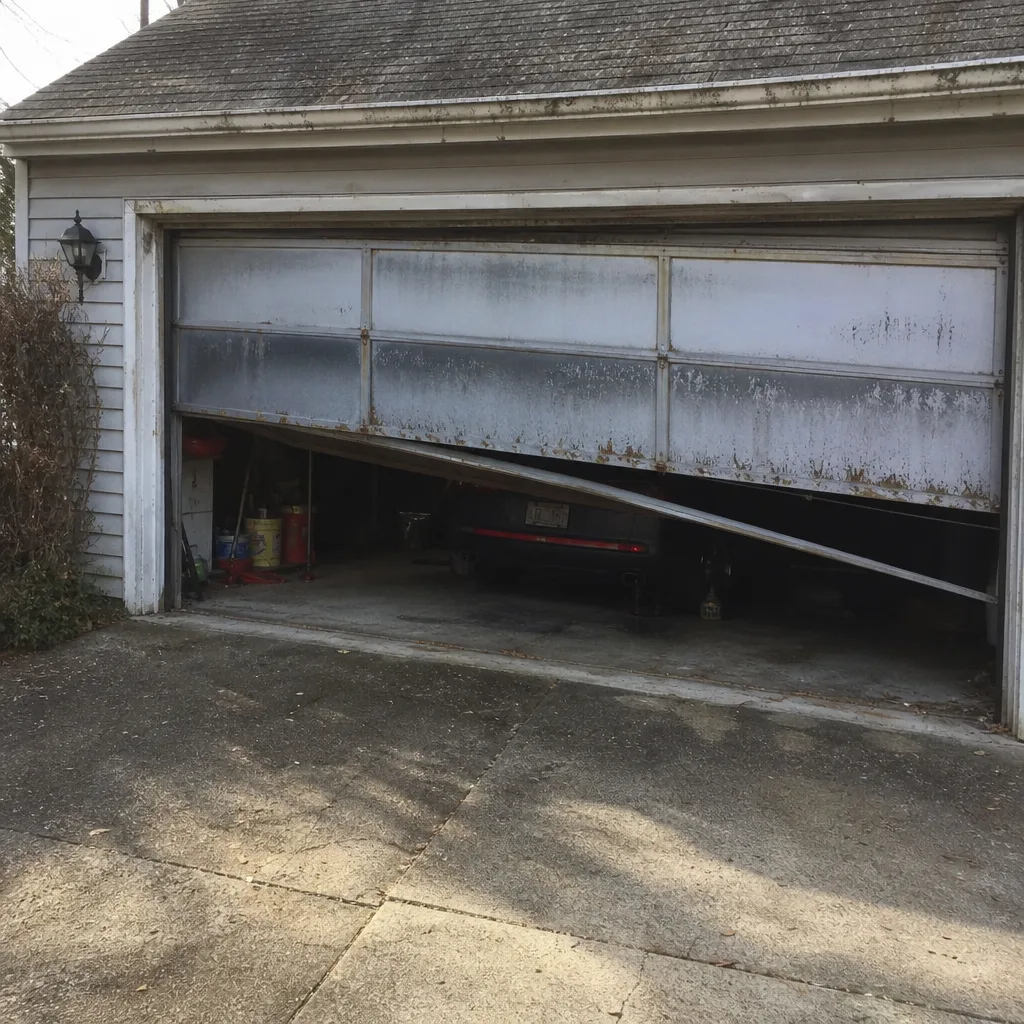 Before
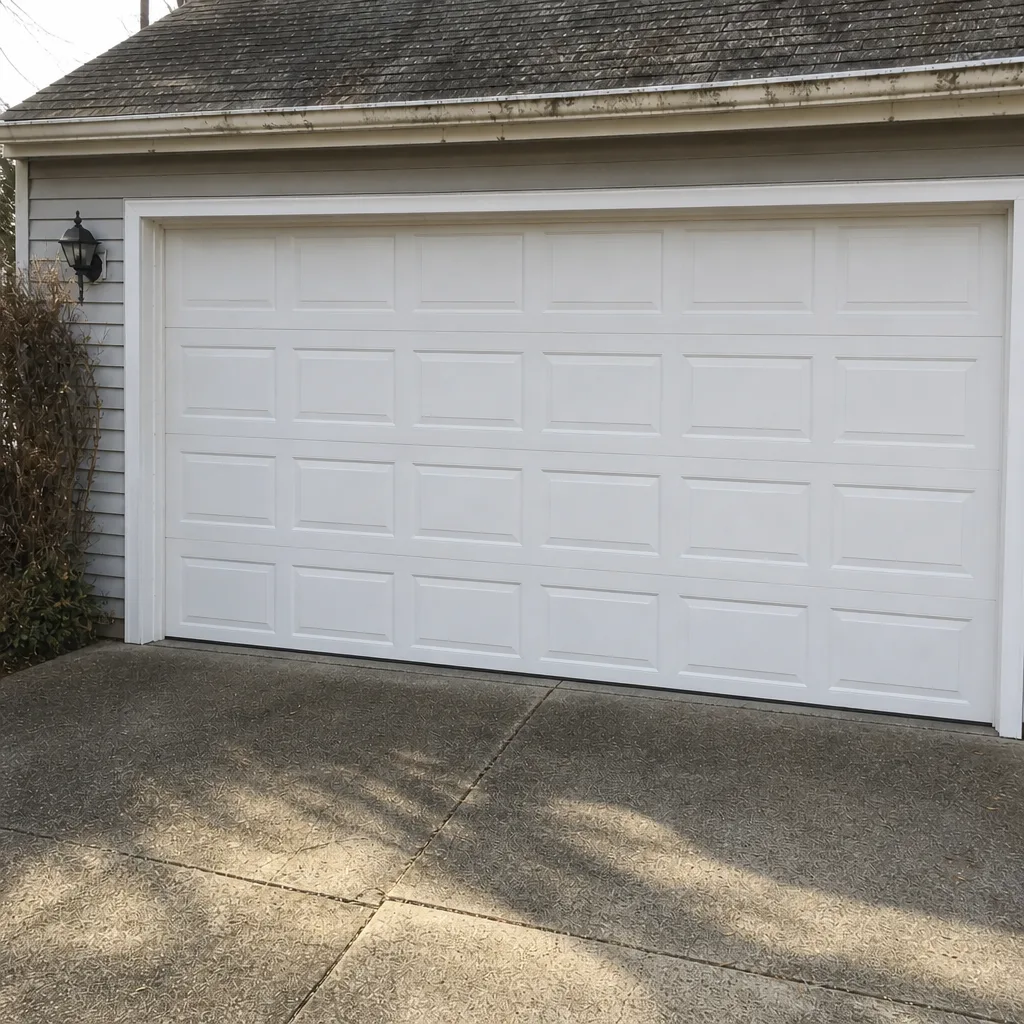 After
When to Call a Professional
Call when any Tier 3 symptom is present, when the balance test shows the door sinking or dropping, when a noise is getting louder week over week, or when a repair involves springs or cables. Springs and cables are the two components that can hurt someone, and no symptom in that category is a wait-and-see. If you’re unsure whether a symptom is Tier 2 or Tier 3, treating it as Tier 2 is the safer error. Woodbridge Garage Door Repair Experts offers free estimates in Woodbridge, and our technicians can diagnose the cause on a single visit. Call (833) 762-7918 for a free estimate and a written price before any work starts.
Frequently Asked Questions
A broken torsion spring usually has a visible gap of a few inches in the coil, and the door will feel extremely heavy when you try to lift it by hand. The door may also move only a few inches before stopping. If either symptom appears, stop using the door and call for repair; a broken spring can cause the door to fall suddenly.
No. Torsion springs are wound to a specific tension and hold enough stored energy to cause serious injury. A trained technician uses winding bars and the correct tension calculation for the door’s weight. Homeowners who attempt this are at real risk of injury. Call (833) 762-7918 to schedule spring replacement.
Phantom reversals are almost always a safety sensor issue. The sensors at the bottom of the track can be misaligned, dirty, or blocked by a shadow or afternoon sun through west-facing doors. Clean and align the sensors first; if reversals continue with clean, aligned sensors and no obstruction, the opener’s logic board needs checking.
Spring life is measured in cycles (an open then close is one cycle), not years. Most springs are rated for a specific cycle count, and heavier doors wear through them faster. In the Woodbridge area, heat in late summer and cold in early winter both accelerate wear, which is why the balance test is worth running every few months.
No. Slack or kinked cables are a safety-critical sign. The cable is under high tension and can slip or snap, and a slack cable means the door is loaded unevenly. Leave the door down and call a professional. Do not attempt to reattach or adjust the cable yourself.
No. Squealing is usually a lubrication issue and is often a five-minute fix. Grinding and rattling point to real wear and should be scheduled. Banging is often a spring tension issue rather than structural failure, but it’s still worth getting checked. Match the sound to the component before assuming the worst.
The Bottom Line
The signs worth acting on are visual and behavioral, not just audible. A door that hesitates, a balance test that shows sinking, a cable with visible slack, rust streaking at panel seams, and sensor-triggered reversals all point to specific components with specific fixes. Sort what you’re seeing into cosmetic, mechanical, or safety-critical, and treat anything involving springs, cables, or a door that won’t stay up as an immediate call. A quick balance test every few months is the cheapest early warning system a garage door has. When you’re ready to schedule, our Woodbridge Garage Door Repair Experts team is one call away.
Written by the team at Woodbridge Garage Door Repair Experts.